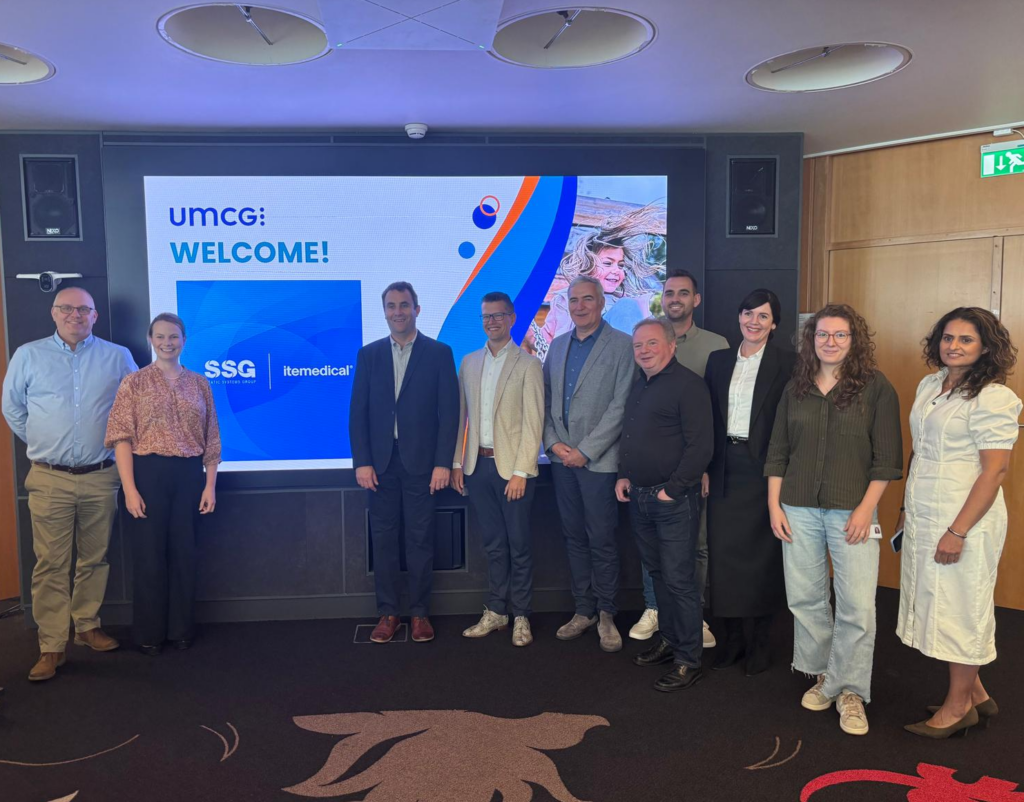
How do you create a quieter ICU environment without missing important medical alarms? During a joint visit to UMCG in The Netherlands, SSG and itemedical explored how intelligent medical alarm management, digital communication and healthcare environment design contribute to reducing the alarm burden on healthcare professionals while creating a calmer environment for patients.
From the Silent ICU concept to the future of Smart Hospitals: a valuable exchange of knowledge and practical experience.
A quieter ICU environment
When you walk into an Intensive Care Unit, you expect to see medical equipment, monitors and hear the sound of alarms. But what does an ICU feel like when the constant stream of audible alarms is largely absent?
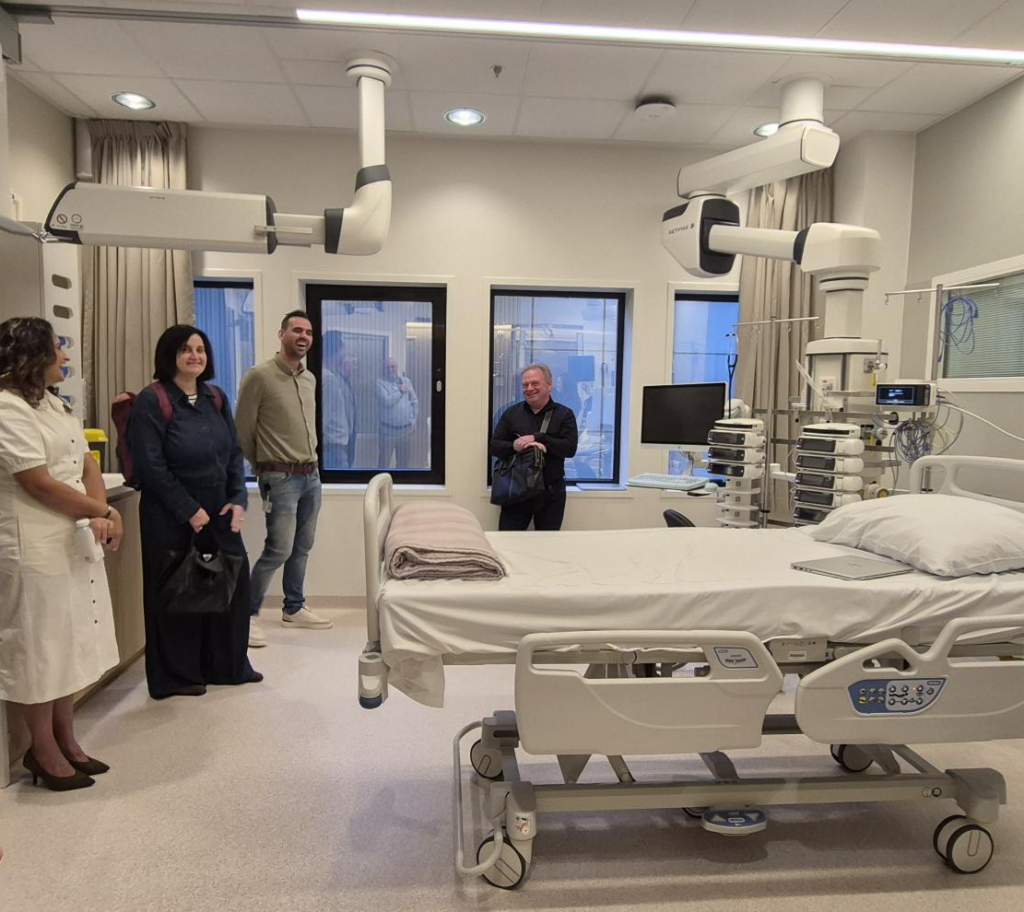
During a tour of the ICU at UMCG Groningen, we experienced this first-hand. The single-patient rooms and absence of the usual alarm sounds created a noticeably calmer care environment.
The UMCG research team introduced us to the vision behind the Silent ICU concept. We discussed how intelligent alarm filtering, prioritisation and alarm reduction help reduce the alarm burden on healthcare professionals. One question remains central: how do you minimise unnecessary interruptions while ensuring healthcare professionals can trust that clinically relevant alarms reach them in time?
From medical alarm management to targeted communication
The SSG team demonstrated how digital nurse call and communication systems support silent alarming and ensure relevant information reaches the right healthcare professionals.
This is where our expertise comes together. itemedical brings expertise in vendor-independent medical device data integration and alarm management, while SSG adds expertise in digital communication and nurse call systems.
Together with UMCG, we continue to optimise medical alarm management. We are now taking the next step by integrating alarm data from infusion pumps to enable more intelligent alarm processing and further reduce unnecessary alarms.
During the visit, we exchanged ideas on how these technologies and clinical workflows complement each other. With a shared goal: fewer unnecessary interruptions and better support for healthcare professionals.
From vision to results
During our visit, we discussed how intelligent alarm management contributes to a quieter care environment. But what does that look like in practice? Based on alarm data from UMCG, itemedical analysed the impact of smart alarm filtering. The analysis showed a 77% to 93% reduction in forwarded alarms on participating departments.
The hospital of the future
Peter Mees, Smart Hospital Product Manager at UMCG, presented the hospital’s ambitious redevelopment plans. The focus goes beyond hospital design and infrastructure to explore how future healthcare environments can meet the needs of patients, staff, research and education.
We also visited the innovative mock-up care environments, where healthcare professionals, designers and project teams test new room layouts, clinical workflows and technologies before construction begins. This allows UMCG to identify potential improvements at an early stage.
Learning across borders
We also discussed the differences between the Dutch and UK healthcare systems, from pressures on healthcare capacity to smart hospital infrastructure and Hospital 2.0. Hospital 2.0 is the UK’s standardised approach to designing and building future-ready hospitals as part of the NHS New Hospital Programme.
One example is James Paget University Hospital in England, where plans for a new hospital are taking shape and SSG and itemedical are working together. As at UMCG, a key question is how hospital design, smart technology and clinical workflows can work together to improve care.
This international exchange of knowledge and experience is what makes our collaboration with SSG so valuable. We learn from each other’s experiences and combine our expertise to support hospitals in developing smarter healthcare environments.
With one shared goal: fewer unnecessary alarm interruptions, a quieter care environment and the right information reaching the right healthcare professional.
Thank you to UMCG and everyone involved for the open discussions, the behind-the-scenes insights and the valuable exchange of knowledge and experience.
Curious about the impact?
Based on alarm data from UMCG, itemedical analysed the impact of smart alarm filtering.
The analysis showed a 77% to 93% reduction in forwared alarms on participating departments