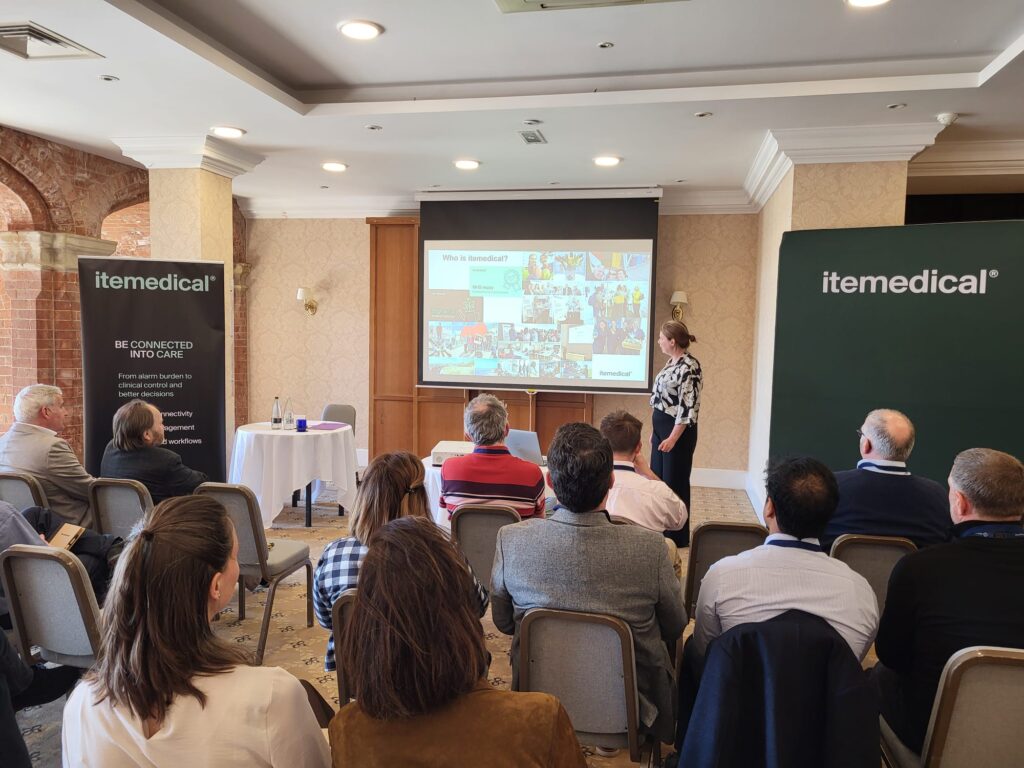
Exploring connected care, alarm management and clinical workflows with NHS professionals in Stratford-upon-Avon. In Shakespeare’s birthplace, Stratford-upon-Avon, NHS professionals from across the UK came together for the care event ‘To be or not to be connected?’ a day of shared learning around connected care, alarm management and clinical workflows.
Together with clinical engineers, digital health, innovation and integration specialists, including participants involved in the New Hospital Programme, we explored some of the questions many hospitals are facing today. How do hospitals maintain overview in increasingly connected environments? How can alarm burden be reduced without losing clinical relevance? And what practical choices are hospitals making as devices, data and workflows become more closely connected?
Throughout the day, presentations, workshops and open discussions created space to exchange experiences and learn from different perspectives across NHS organisations.
Recognisable challenges
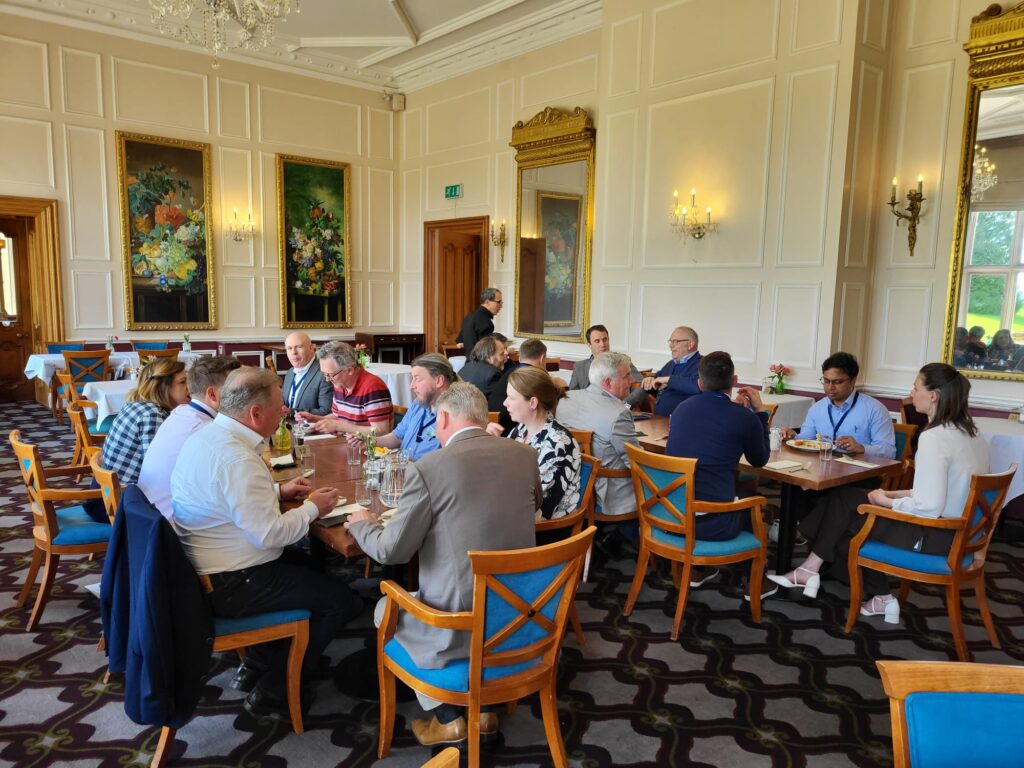
As more medical devices, systems and communication tools become connected, hospitals gain new opportunities to improve care. At the same time, this creates new complexity. Participants discussed the importance of maintaining clear clinical workflows, ensuring relevant information reaches the right professional, and avoiding unnecessary interruptions in already demanding care environments.
The conversations showed that connected care is not only a technical challenge. It is also a clinical, organisational and workflow challenge.
Key topics form the day
Several themes returned throughout the event:
- Medical device connectivity and integration
- Alarm reduction and clinical coaching
- Workflow-based intelligent rules
- Data-driven clinical decision support
- Mobile alarm notifications and clinical communication
- The role of technology in single-room patient care
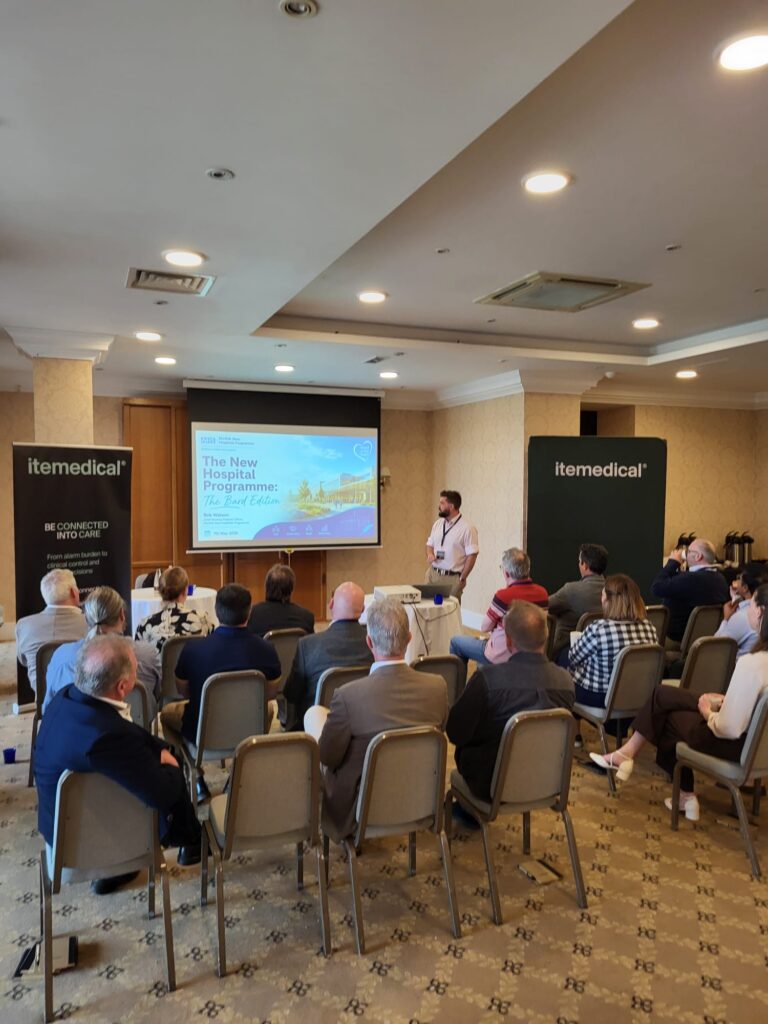
A special thank you goes to Robert Watson, Chief Nursing Projects Officer at James Paget University Hospitals NHS Foundation Trust, for sharing his perspective on the future role of technology in single-room patient care.
Key takeaway
Connected care is about how everything comes together
One message came through clearly during the discussions: connected care is not defined by individual technologies alone. Its value depends on how well devices, data, workflows and clinical communication come together in daily care. When these elements are aligned, technology can support calmer working environments, clearer decision-making and better clinical focus.
From conversation to practice
The themes discussed in Stratford-upon-Avon are also taking shape in practice. Together with Static Systems Group (SSG), itemedical is involved in the James Paget Hospital project, where technologies such as smart nurse call, ambient monitoring, AI falls detection and medical device integration come together in a new hospital environment.
Itemedical’s role focuses on medical device connectivity and intelligent alarm management: connecting bedside medical devices, interpreting alarm data and helping ensure clinically relevant information reaches the right care professional at the right time.
Continuing the conversation
The event confirmed that connected care requires more than connecting systems. It asks for a shared understanding of clinical workflows, alarm burden, data relevance and the daily reality of care teams. We would like to thank everyone who joined the event and contributed to the discussions. The curtain may have fallen in Stratford-upon-Avon, but the conversation around connected care, interoperability and alarm management continues.
Interested in discussing connected care, medical device integration or intelligent alarm management? Get in touch with Emily Baker.